Intro To The SGS World
PERSPECTIVE
Perspective is a subjective view that people view something, which sometimes might not be exactly the correct perspective that they wanted to be seen. Similar to the School of Global Studies (SGS), Thammasat University, where it has been established for 7 years under the study about global and social entrepreneurship. Due to the Thai name (โลกคดีศึกษา), it is misunderstood by many people that SGS is about literature, historical study, or archeology.
To change the perspective on SGS, therefore, we created a board game that illustrates the details of what SGS is and what courses are they teaching. We aim to build a new perspective about SGS on players after they finishing playing the board game.
The board game is about collecting 15 points to be the winner.
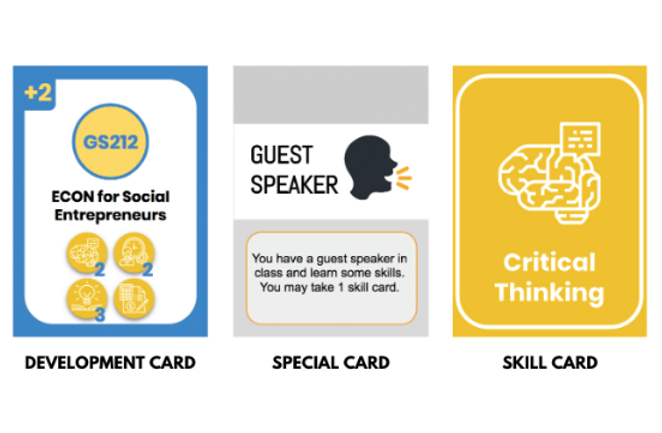
There are points on development cards, which are the courses of SGS. To earn development cards, players must have the number of skills that are required on the card. The board game diffuses the overall concept and experiences of being a student in SGS to the players. Instead of only relying on the presentation, they can learn about the faculty through our board game design.


Meet The Team

CK

Fairy

Gift
Design Challenge
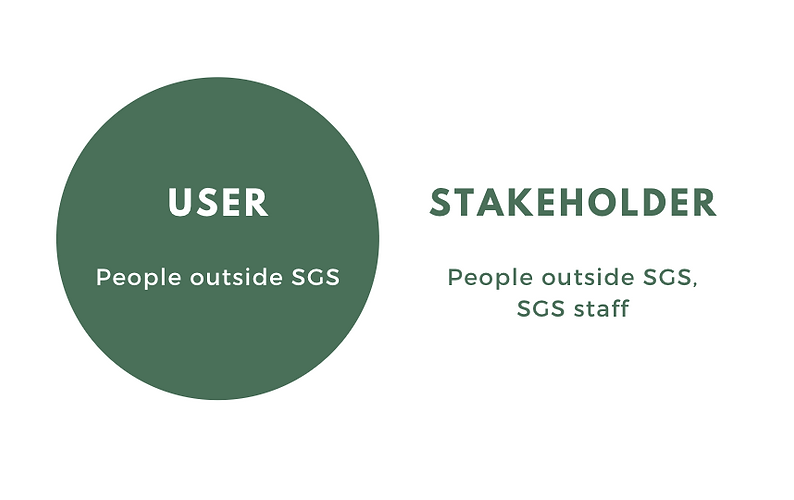
" WE WOULD LIKE TO CREATE AN IDEA OR A WAY TO EXPLAIN ABOUT GSSE TO THE OUTSIDER/USER IN ORDER FOR THEM TO UNDERSTAND AND SHAPE THEIR PERSPECTIVES TOWARDS GSSE (SGS) "


Interview
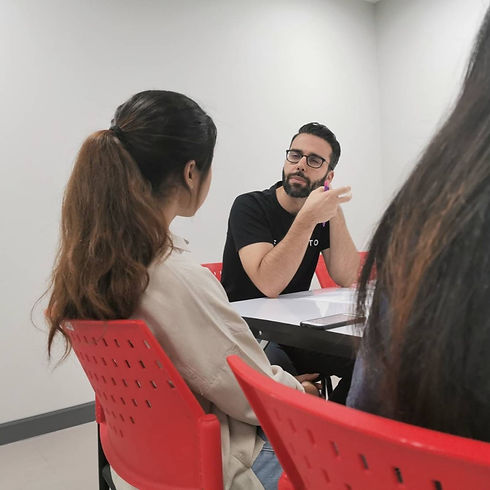
Mr. Hassan - PR team of SGS
Global studies and social entrepreneurship are two new words for both Thai and Western.
The wording of the program is hard to explain what the program really does clearly since it has various courses so people think SGS is going to be something else without any specifications.
SGS courses provide real-world experiences to students through the summer internship program or having guest speakers who are experts in those particular fields to share or train the students in classes.
SGS has a good mission, good idea, and program plan.
Classroom environment, students and instructors have the opportunity to interact with each other, as well as not many people involved in one class so each student has the opportunity to know each other.
Data Analysis
After the interview, our team sat down together and shared insights each of use got.
The insights from the interview has been categorized into 3 themes

Idea Generation
Before moving forward to brainstorming part, we created How Might We questions,
which is based on the insights, to shape our ideas in a certain areas.
1. HOW MIGHT WE CREATE A PLATFORM THAT GATHERS STUDENT EXPERIENCES TO GAIN CONFIDENCE AND CREDIBILITY OF THE PROGRAM THAT STUDENTS WILL BE PROVIDED?
2. HOW MIGHT WE CREATE A DESIGN THAT PRESENTS GSSE TO VARIOUS TYPES OF STUDENTS
E.G. STUDENTS WHO STUDY IN SCIENCE OR MEDICAL ENGINEERING MAJOR
3. HOW MIGHT WE CREATE A DESIGN THAT EXPLAINS THE TWO WORDS IN
AN UNDERSTANDABLE WAY?
Brainstorming
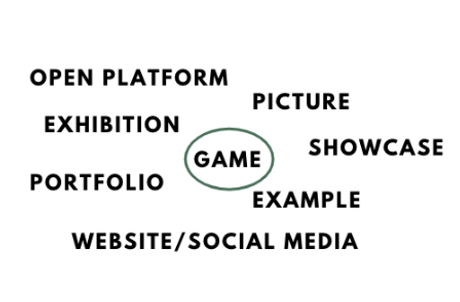
By responding to the HMW questions above, we listed down the possible ideas that we can develop on to change the perspective of people toward the faculty
The final decision is Game
We came up with many ideas in 30 minutes of brainstorming and the most suitable one is creating a game.
Then we listed down what message do we expect to convey to the players. After that, we concluded the final design choices on monopoly and board games.
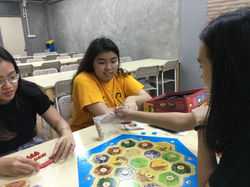
Finally, we chose to work on a board game because it is flexible and relatable to add information about SGS. Then we discussed the elements of the board game. However, to get a deeper understanding of the real mechanism of the board game, we decided to play and observe together at the board game store near the university.

Observation
Location: Board game store near ChiangRak1, Thammasat University
Duration: 2 hours
 |  |  |
|---|
We chose an experience tour from NESTA to record the practices, system, and environment while playing board games The tool helped us to observe the situation in details by looking into the practices, products, and environments.

Creating Prototype
We divided tasks to each member:
I did the design of the development and special cards
Gift did the design of skills and special cards.
Fairy wrote down the details of each card and did the game instruction

In the designing stage, we used Adobe Photoshop to create different types of cards. I have basic knowledge of this program as I was taught in high school. There are still many features that I did not know, so this gave me an opportunity to explore more about it. I learned how to overlay the layers and creates a round-corner shape in a rectangle.
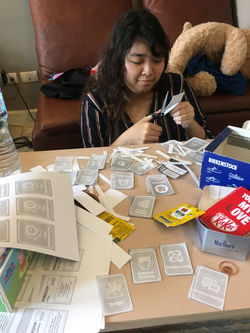
On Saturday, we met up at Fairy’s dorm to finish the board game process such as printing papers and cutting cards. This took about 3 hours to finish it.
 |  |  |
|---|---|---|
 |  |
Testing
We tested the board game prototype with a group of university students who do not know any information about SGS. We contacted them through Fairy and the game launched at her dorm. They looked excited about the game and wanted to explore more about SGS since they only knew the name. After the game, we asked for their feedback and recorded them in a feedback capture grid.


Conclusion
Perspectives of people toward SGS is different from what it is. To change a perspective, we believe that it must start from understanding. Therefore, we created the board game as our design to communicate details about SGS to players through the game. From the feedback we received, it creates fun together with acknowledging the courses but there are few points that the game lacks, which is a great lesson for us to develop our board game in the future.